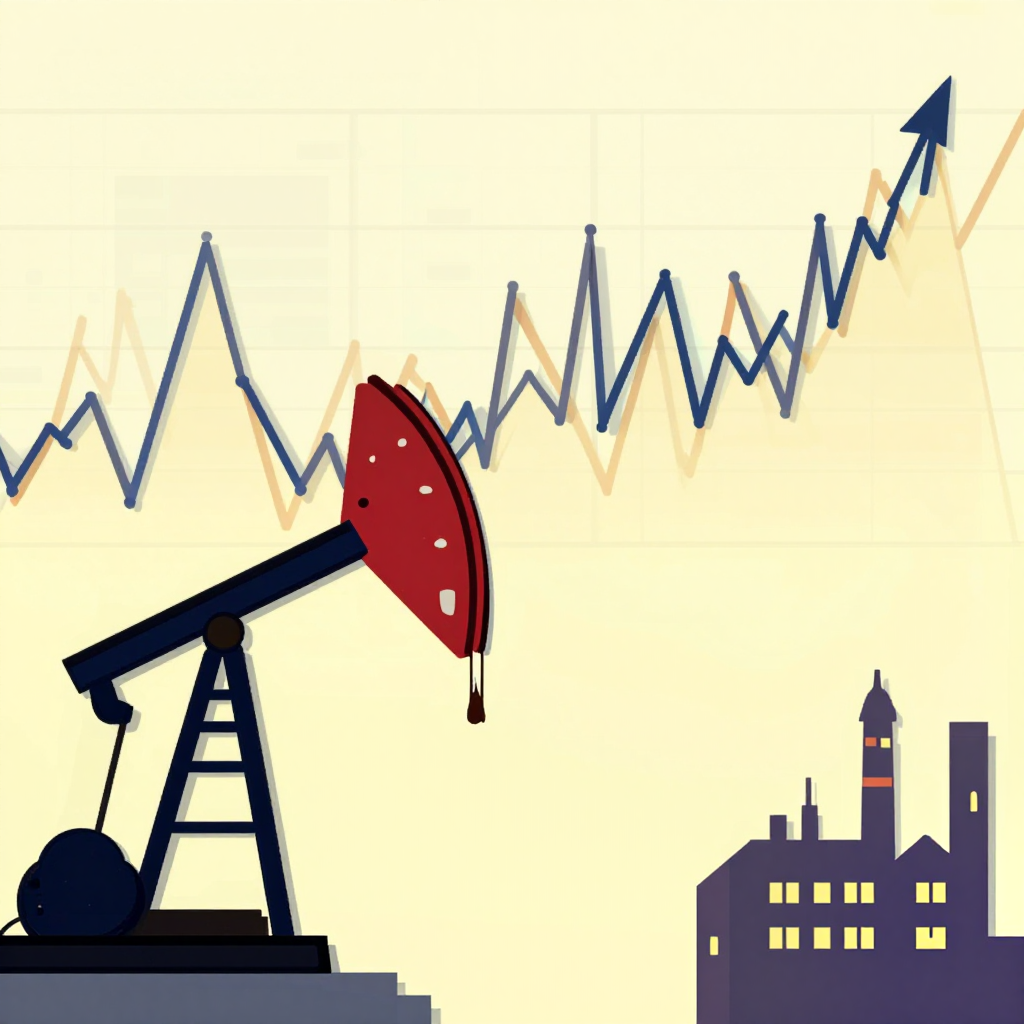
Daily World Economy News — 2026-05-24
Top world economy stories from 2026-05-24: Trump’s Iran War Reignited Stagflation Fears — and May’s Data Just Confirmed It - 24/7 Wall St., Bond Strategists Warn Yields to Stay High Even If Iran War E
A curated roundup of yesterday’s top world economy stories (2026-05-24).
1. Trump’s Iran War Reignited Stagflation Fears — and May’s Data Just Confirmed It - 24/7 Wall St.
Trump’s potential conflict with Iran has reignited concerns about stagflation, which was further supported by recent economic data. The article suggests that developments related to the potential Iran conflict have increased economic uncertainty. This uncertainty has led to renewed fears about stagflation, a condition characterized by slow economic growth and high inflation. The May data is presented as a confirmation of these existing concerns. This situation indicates that geopolitical events are now having a tangible effect on broader economic conditions.
Source: 24/7 Wall St. — Read original
2. Bond Strategists Warn Yields to Stay High Even If Iran War Ends - Yahoo Finance
Bond strategists anticipate that yields will remain high even if the war in Iran concludes. This prediction comes from an analysis of the current economic landscape and market conditions. The article suggests that underlying factors contributing to high interest rates are likely to persist regardless of the outcome of the conflict. Bond investors are factoring in the ongoing geopolitical risks when assessing future interest rate movements. This indicates that the resolution of the Iran conflict is not expected to immediately lead to a significant shift in bond yields. The broader impact is that investors must continue to account for geopolitical uncertainty in their investment strategies.
Source: Yahoo Finance — Read original
3. ECB Signals Possible Rate Hike as Iran Conflict Fuels Inflation Concerns - econotimes.com
The European Central Bank is signaling a possible interest rate increase due to inflation concerns fueled by the conflict in Iran.
This signal suggests that the ECB is considering raising its monetary policy to combat inflationary pressures in the Eurozone. The context provided indicates that the ongoing conflict in Iran is contributing to these inflation concerns. Consequently, the central bank is likely assessing how to manage rising prices across the affected economies.
This development has the potential to influence borrowing costs and economic activity across the Eurozone.
Source: econotimes.com — Read original
4. Iran war could add billions of dollars in interest payments to US debt - Financial Times
Iran’s potential war could result in billions of dollars in interest payments to the United States debt.
This financial implication stems from potential shifts in global energy markets and subsequent economic pressures affecting international debt servicing. Such a conflict could alter geopolitical dynamics, which in turn influences investor confidence and the perceived risk associated with sovereign debt. The interest payments would arise from the mechanics of the existing debt structure under different geopolitical conditions.
This development could have significant repercussions for global financial stability and the overall economic relationship between the involved nations and the international financial system.
Source: Financial Times — Read original
5. More War-Driven Inflation Seen in Fed’s Favored Gauge - Yahoo! Finance Canada
Inflation is showing signs of being driven by conflict in the metric the Federal Reserve favors, according to the article.
This indicates that the factors driving recent inflation are increasingly linked to ongoing wars. The gauge the Federal Reserve is focusing on is likely a specific measure used to assess inflationary pressures. Therefore, the news suggests that geopolitical conflicts are playing a more significant role in current inflation figures than previously assessed.
This development suggests that policymakers need to consider the impact of international conflicts when evaluating inflation trends.
Source: Yahoo! Finance Canada — Read original