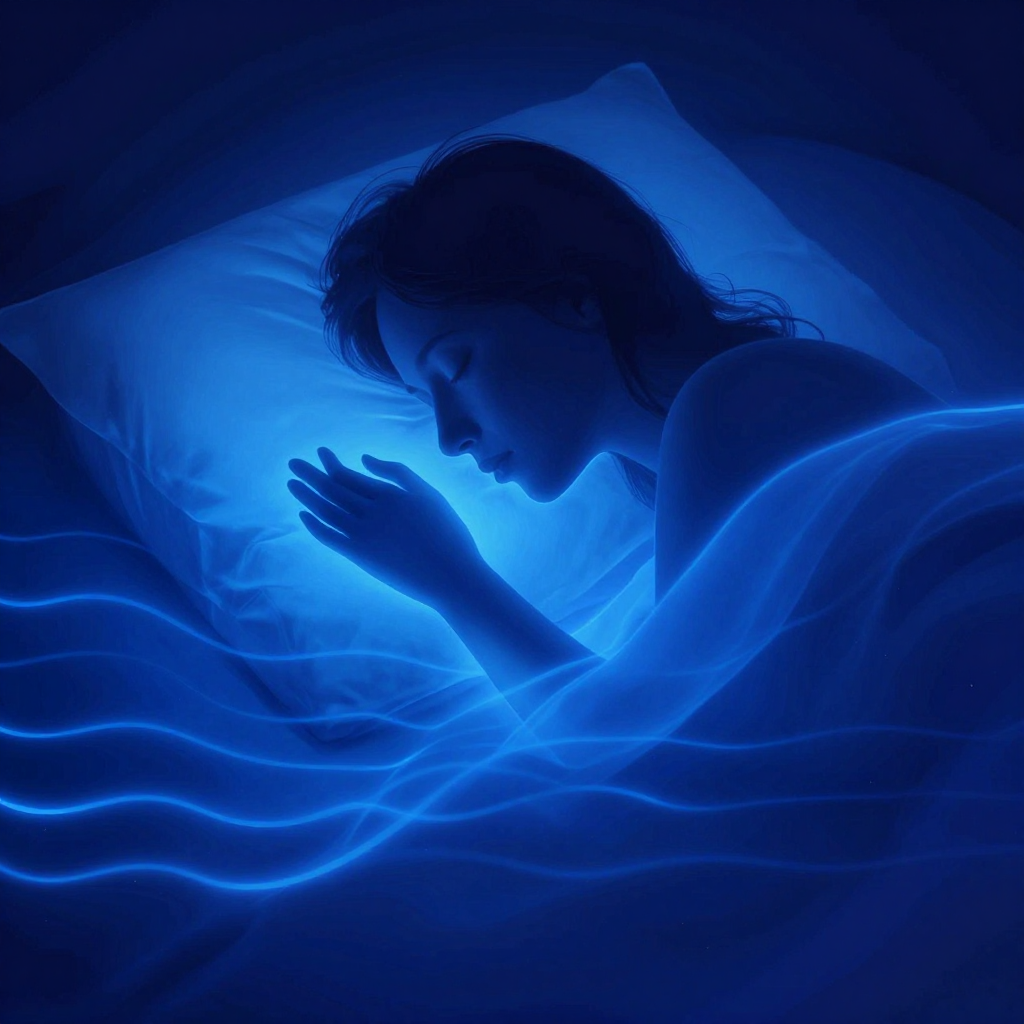
Blue Light's Impact on Your Sleep Quality
Learn how blue light exposure affects your sleep quality and find tips for better rest.
We are constantly bombarded by the glow of screens, and a significant part of our daily routine involves exposure to blue light emitted by phones, tablets, and computers. While this light offers clear benefits for daytime alertness, there is growing concern that its impact on our sleep quality may be more complex than previously understood. Recent research is challenging older notions about this light’s effect, suggesting that the timing and intensity of light exposure, especially in the evening, can directly interfere with the body’s natural sleep-wake cycle (Reference 4). Understanding this relationship is crucial because sleep quality directly affects our physical and mental health, making this topic highly relevant to modern wellness.
The evidence increasingly points to a nuanced interaction between blue light and our circadian rhythms. Blue light, present in many digital devices, is known to suppress the production of melatonin, the hormone essential for regulating sleep onset (Reference 1). This suppression is a primary mechanism through which exposure can disrupt the sleep cycle. Studies have analyzed how the interplay between daytime and nighttime light affects sleep quality, finding significant correlations, particularly in populations with specific mental health conditions, such as bipolar disorder, where the interaction between light exposure and sleep patterns is particularly notable (Reference 3). This indicates that the effect is not just about the light itself, but how it synchronizes or desynchronizes our internal body clocks. Furthermore, while the general fear of blue light is widespread, it is important to note that not all exposure is equally detrimental; for instance, some research explores the potential benefits of alternative light spectrums, suggesting that adjusting the color temperature can be a practical intervention (Reference 6). This suggests that the severity of the disruption depends heavily on the context of exposure.
To mitigate potential sleep disruption from screen use, several practical adjustments can be incorporated into evening routines. It is highly recommended that you establish a strict screen-free period at least one hour before you plan to sleep to allow your body time to naturally begin producing melatonin (Reference 2). When you must use a device in the evening, consider utilizing built-in night mode settings or specialized blue light filtering software to soften the light emitted. Experimenting with warmer, amber-toned light settings on your devices can help minimize the stimulating effect of the blue wavelengths on your sleep readiness (Reference 6). Furthermore, consciously reducing overall screen time before bed allows your mind and body to transition away from stimulating activities into a restful state.
Ultimately, managing light exposure for better sleep involves recognizing that environmental factors play a significant role in internal biological rhythms. However, the precise long-term consequences of chronic, low-level exposure across diverse populations remain an area that is still actively being investigated.
Sources
- Research shows blue light exposure may be affecting sleep quality, could carry broader health risks - Boston 25 News — Boston 25 News (2026-01-28)
- Insomnia and screens: more than just blue light—causes and solutions - Hospital Clínic Barcelona — Hospital Clínic Barcelona (2025-09-26)
- Interaction of daytime and nighttime light exposure on objective sleep quality in patients with bipolar disorder: a cross-sectional analysis of the APPLE cohort | Translational Psychiatry - Nature — Nature (2025-08-18)
- Study Reveals Why Even a Little Light Can Disrupt Your Sleep Patterns - Verywell Health — Verywell Health (2026-02-20)
- Why Using Your Phone at Night May Not Be as Bad as You Think - Time Magazine — Time Magazine (2025-11-20)
- Can Red Light Settings on Phones Improve Sleep Quality? - Health: Trusted and Empathetic Health and Wellness Information — Health: Trusted and Empathetic Health and Wellness Information (2026-02-26)
- Heart Attack, Stroke: Exposure to Light While You Sleep Raises Risk - Healthline — Healthline (2025-11-17)
- How Blue Light Affects Kids’ Sleep - Sleep Foundation — Sleep Foundation (2025-07-23)
- Morning blue light therapy may offer many benefits for older adults - Harvard Health — Harvard Health (2025-06-01)
- The hidden ways light at night damages your brain, mood, and metabolism - ScienceDaily — ScienceDaily (2025-08-08)