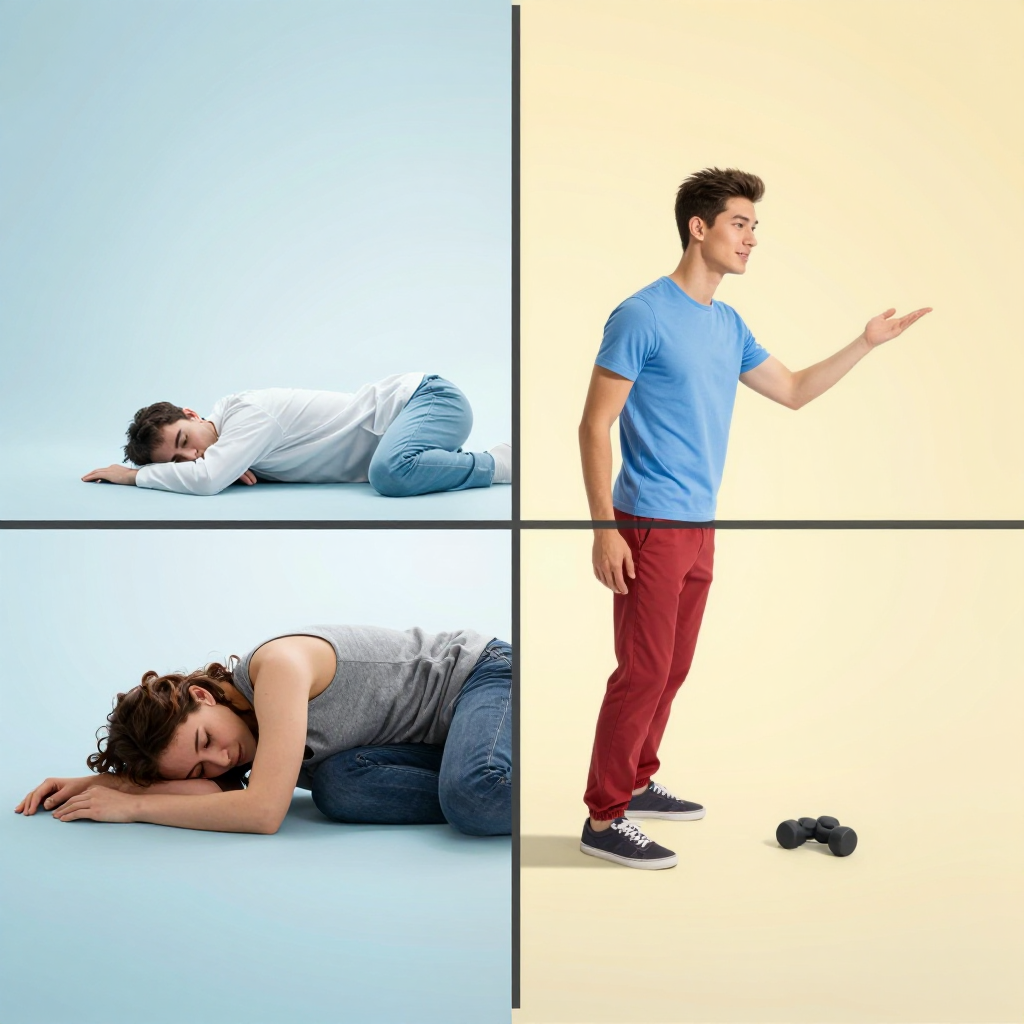
Sedentary vs Exercise Health Risks
Sedentary life vs. exercise: understand the different health risks associated with each.
The shift in our daily lives, dominated by screens and desk work, has brought the relationship between sitting still and movement into sharp focus. While we have long understood that physical activity is vital for health, recent research emphasizes that the amount of time we spend sedentary can be as significant a health risk as the activity we engage in. Understanding this difference is crucial because the risks associated with prolonged inactivity are increasingly being recognized as a major public health concern (Reference 6).
The evidence clearly points to the dangers of prolonged sedentary behavior. When we sit for long periods, our bodies enter a state that is metabolically less efficient, regardless of how well we manage our diet. Research from the American Heart Association Journals indicates a strong link between low physical activity and increased cardiovascular risk (Reference 4). Furthermore, scientists have quantified the impact of sitting all day, revealing that there is a measurable cost to remaining motionless (Reference 5). This suggests that simply being still is not neutral; it actively contributes to negative health outcomes.
The key distinction lies in the mechanism. While exercise—defined as intentional physical activity—offers profound benefits, the sedentary lifestyle introduces systemic risks. The benefits of movement are well-established, as activity has profound cardiovascular benefits (Reference 4). However, the gap between sedentary time and active time is where the most immediate concern lies. Even short bursts of activity can offer protective benefits, demonstrating that breaking up long periods of sitting is beneficial for overall health (Reference 2). Understanding this contrast helps us see that the absence of movement carries a risk, whereas the presence of movement offers protection.
When it comes to determining the best approach, the focus shifts to integration rather than pure opposition. Experts note that incorporating short, intentional movements can effectively combat the health risks associated with sitting all day (Reference 6). Whether you are aiming for intense workouts or simply reducing prolonged sitting, the goal is to move more frequently throughout the day. Scientific insights suggest that incorporating short bursts of activity is a powerful strategy for longevity (Reference 2), and evaluating the types of activity—whether it is intense exercise or active breaks—helps tailor a beneficial plan (Reference 3).
To translate this knowledge into daily life, focus on increasing movement breaks frequently throughout your workday. Aim to stand up and move for a few minutes every hour to interrupt long stretches of sitting. Incorporate short bursts of movement, such as taking the stairs instead of the elevator or engaging in short walks during breaks. Schedule deliberate, short physical activities throughout the day to shift your balance away from prolonged stillness. Finally, prioritize regular, moderate activity to reap the comprehensive cardiovascular advantages supported by extensive research (Reference 4).
While the research provides a strong framework for action, the precise long-term, personalized effects of every specific pattern of sitting and moving remain an area actively being studied.
Sources
- 8 Signs You’re Too Sedentary—and How to Fix It - Real Simple — Real Simple (2026-01-27)
- The short bursts of activity that could help you live longer - BBC — BBC (2025-12-05)
- Inside vs. Outside: Which Workout Is Best? - Verywell Health — Verywell Health (2026-01-11)
- Epidemiology and Cardiovascular Benefits of Physical Activity and Exercise | Circulation Research - American Heart Association Journals — American Heart Association Journals (2025-07-03)
- Scientists Revealed How Much Exercise You Need to ‘Offset’ Sitting All Day - ScienceAlert — ScienceAlert (2025-06-24)
- ‘Active breaks’ can combat the health risks of a sedentary lifestyle, but what kind of exercise is best? - The Conversation — The Conversation (2025-06-17)
- How a Sedentary Lifestyle Impacts Your Health - Cleveland Clinic Health Essentials — Cleveland Clinic Health Essentials (2025-05-16)
- Alzheimer’s: Minimizing time spent sitting may help lower risk - Medical News Today — Medical News Today (2025-05-19)
- New School of Medicine study shows short breaks for exercise reverse negative impact of otherwise sedentary lifestyle - Today@Wayne — Today@Wayne (2025-09-22)
- Longevity: Expert tips for staying active as we age - Medical News Today — Medical News Today (2026-02-15)