Leptin Resistance: Unlocking Appetite Control
Learn how leptin resistance affects appetite control and weight regulation.
Understanding how our bodies manage hunger is central to modern health and wellness, especially in an era where managing weight and metabolic health is a major focus. For a long time, appetite was thought of as a simple battle between physical hunger and mental willpower; however, recent research has illuminated a much more complex hormonal landscape governing appetite regulation, pointing toward the critical role of leptin resistance.
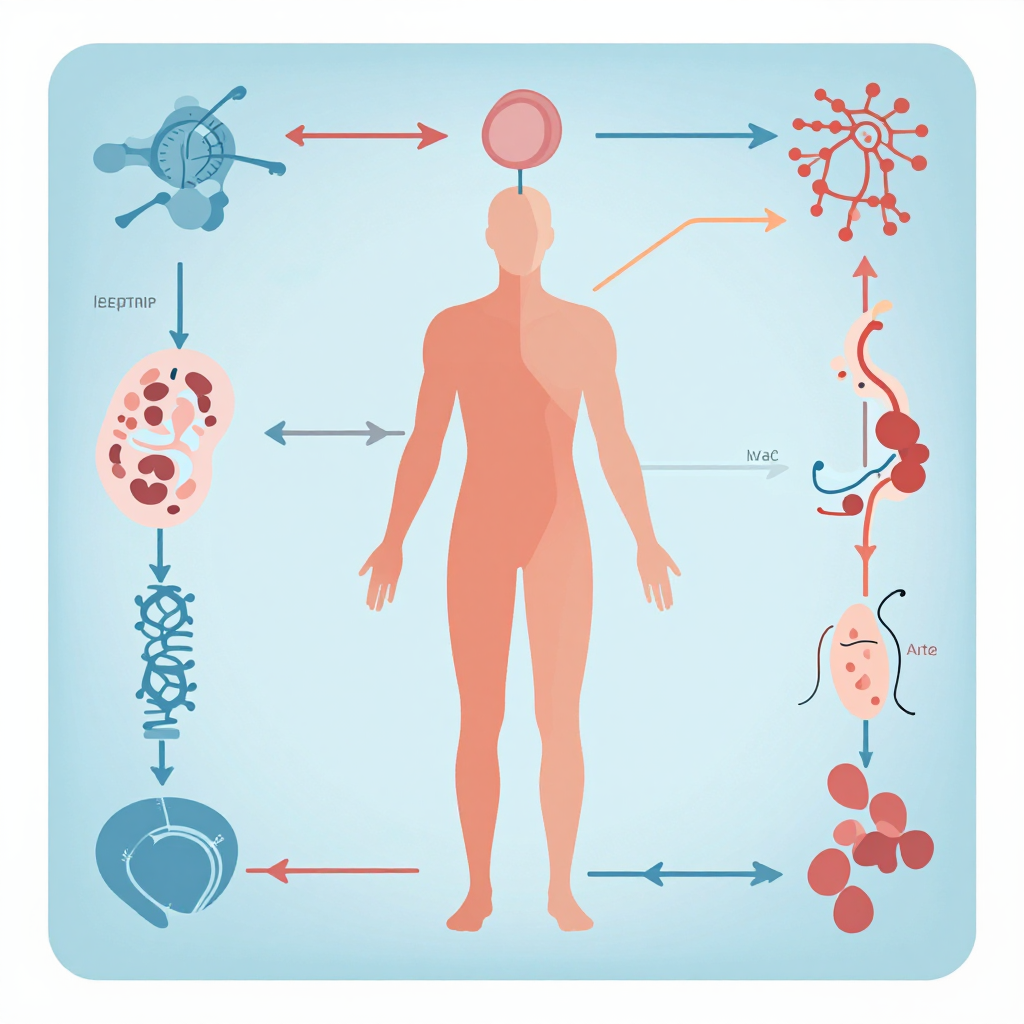
The cornerstone of satiety signaling is a hormone called leptin, which acts like a messenger from our fat cells to the brain, telling us how full we are and encouraging us to eat less (Reference 4). Leptin levels are directly related to body fat stores; higher levels signal adequate energy reserves. When people carry excess weight, particularly in conditions involving obesity, this system can become disrupted, leading to a phenomenon known as leptin resistance. This means that even when fat stores are high, the brain does not properly register the satiety signal from leptin (Reference 6).
The mechanisms underlying this resistance are intricate and involve other metabolic players. Research suggests an interplay between leptin and other fat-related hormones, such as ghrelin (the hunger hormone) and adiponectin, as well as genetic factors influencing appetite control. Specifically, the relationship between leptin and these systems is connected to the expression of genes like FTO and MC4R, which play roles in how we process food and regulate energy expenditure (Reference 5). Furthermore, lifestyle interventions have proven their efficacy in modulating these responses. For instance, studies have shown that physical activity can positively influence these hormonal balances; a randomized trial involving adolescents with obesity demonstrated an effect of exercise on the body’s hormonal responses related to leptin resistance (Reference 1). Similarly, trials combining aerobic exercise with a calorie-restricted diet have been shown to alter serum leptin concentrations in adults with overweight or obesity (Reference 3).
Recognizing this connection between hormones and appetite provides powerful opportunities for intervention. To improve metabolic health and manage appetite effectively, focusing on activity and balanced nutrition becomes essential strategies.
Incorporating consistent aerobic exercise is a highly effective way to enhance the sensitivity of the body’s hormonal signals to leptin and improve overall metabolic function (Reference 1). Pairing this physical activity with a controlled caloric intake, such as a slight energy deficit through a healthy diet, has been shown in trials to positively impact circulating leptin levels (Reference 3). Furthermore, understanding the interconnectedness of these signals encourages a holistic approach where managing inflammation and weight is viewed through a hormonal lens. Finally, recognizing that genetic predispositions interact with environmental factors helps personalize health strategies for better outcomes (Reference 5).
While we are making significant progress in understanding the complex dance between appetite hormones and metabolism, there remain numerous nuances concerning the precise long-term developmental impacts of these dysregulations on lifelong health trajectories that continue to be explored.
Sources
- Effect of exercise on hormonal responses in adolescents with obesity and leptin resistance: a randomized trial - Nature — Nature (2026-01-14)
- How gestational diabetes could affect a child’s health before birth - Medical Xpress — Medical Xpress (2026-06-11)
- Aerobic Exercise Plus Hypocaloric Diet on Serum Leptin Concentrations in Adults With Primary Hypertension and Overweight/Obesity: Results From the EXERDIET-HTA Trial - Wiley Online Library — Wiley Online Library (2026-05-04)
- The Science of Appetite Control: How Hormones Regulate Hunger and Satiety - News-Medical — News-Medical (2026-02-24)
- Interplay Between Enteroendocrine Hormone (Leptin) and Adipokines (Ghrelin and Adiponectin) with Gastric Expression of FTO and MC4R Genes - Nature — Nature (2025-12-21)
- Metabolic syndrome: epidemiology, mechanisms, and current therapeutic approaches - Frontiers — Frontiers (2025-09-03)
- This Little-Known Ingredient Supports Fat Loss & Improves Appetite Hormones - MindBodyGreen — MindBodyGreen (2026-04-25)
- The shift toward multi-target strategies in obesity therapeutics - News-Medical — News-Medical (2026-01-20)
- Chia seeds may help the brain regulate appetite and inflammation - PsyPost — PsyPost (2026-01-26)
- Associations of body composition and resting metabolic rate with homeostatic and hedonic components of appetite - Nature — Nature (2026-06-02)