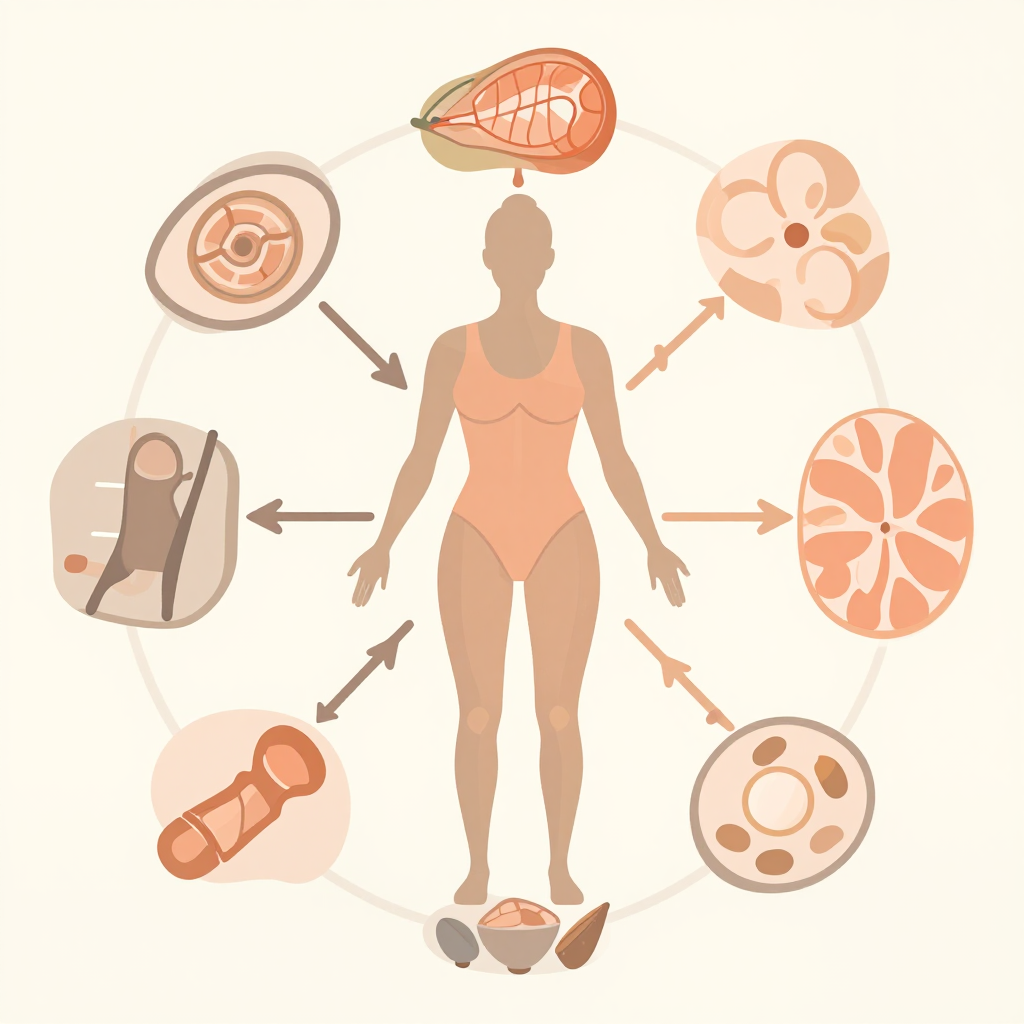
Telomeres and Your Lifestyle Secrets
Learn how lifestyle choices affect telomere length and overall health.
The story of telomere length—the protective caps at the ends of our chromosomes—has recently moved from a niche biological concept to a significant focus in modern health and longevity research. While the initial understanding focused purely on genetics, recent findings strongly emphasize that lifestyle choices are powerful modulators of this fundamental marker of cellular aging (Reference 4). Understanding how external factors influence these telomeres offers us tangible pathways to potentially slow down the biological clock and improve overall healthspan.
What the evidence is telling us points toward a complex interplay between environmental exposures and personal habits. Research has begun to establish concrete links between our daily environment and telomere dynamics. For instance, studies have demonstrated associations between air pollution exposure and shorter leukocyte telomere length in adult populations (Reference 1). This suggests that breathing polluted air may contribute to accelerated cellular aging. Furthermore, physical metrics are also implicated; for example, the waist-to-hip ratio has been shown to predict faster telomere shortening than psychological states like depression (Reference 3). This highlights that physical body composition plays a crucial role alongside external stressors.
Beyond environmental and physical factors, specific behaviors have emerged as potential modulators. Lifestyle habits are increasingly recognized as critical determinants of telomere health. For example, the frequency of certain daily activities is being scrutinized; there is emerging evidence suggesting that consuming three to four cups of coffee daily might play a role in slowing cellular aging (Reference 2). This indicates that even seemingly innocuous daily rituals can have systemic biological effects on our cells. Moreover, the implications of these shortened telomeres are not just about cell health but extend to organ systems; scientists are investigating the link between shortened telomeres and pathology in the brain and cardiovascular system (Reference 6), as well as potential markers for heart disease and cancer (Reference 5).
Translating this knowledge into daily practice involves focusing on holistic well-being. Prioritizing clean air exposure through mitigating pollution sources is one important step in protecting cellular integrity. Encouraging a healthy body composition, such as maintaining a favorable waist-to-hip ratio, supports the overall health of our cellular structures. Furthermore, adopting habits that reduce chronic stress and promote physical activity contributes to an environment conducive to longer telomeres. Finally, mindful consumption of daily habits, like moderating certain substances, can contribute positively to the long-term biological profile of the body.
Ultimately, while we are making significant strides in understanding the influence of lifestyle on telomere length, the precise mechanisms linking these changes to complex diseases remain an area actively under intense investigation.
Sources
- Associations between air pollution and relative leukocyte telomere length among northern Swedish adults based on findings from the Betula study | Scientific Reports - Nature — Nature (2025-09-23)
- Drinking three to four cups of coffee a day may slow cellular aging - News-Medical — News-Medical (2025-11-28)
- Waist-to-hip ratio predicts faster telomere shortening than depression - PsyPost — PsyPost (2026-02-13)
- Link Between Shortened Telomeres and Brain Pathology Mitigated by Modifiable Risk Factors - Neurology Today — Neurology Today (2025-07-03)
- Tiny DNA caps could hold clues to heart disease, cancer among Filipinos - The Varsitarian — The Varsitarian (2025-09-07)
- Biological age gap: How does it impact brain and vascular health? - Medical News Today — Medical News Today (2026-03-10)
- Advancing Precision Medicine: Leveraging Genomic and Aging Biomarkers for Enhanced Cancer Risk Prediction - Nanyang Technological University - NTU Singapore — Nanyang Technological University - NTU Singapore (2026-03-23)