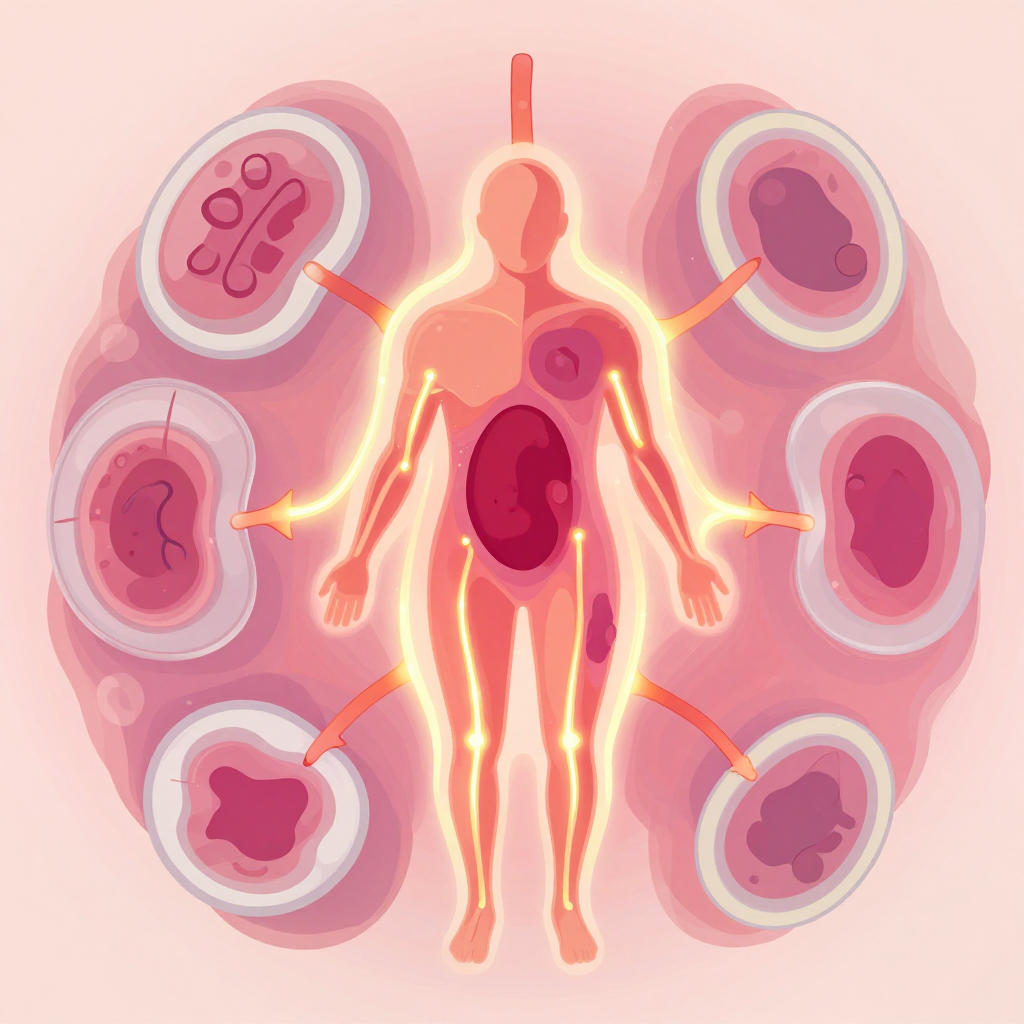
Unlock Energy: Protecting Your Mitochondrial Health
Learn how to boost and protect your mitochondrial health for better energy and well-being.
Mitochondria, the tiny powerhouses within our cells, are fundamentally responsible for generating the energy that fuels every bodily function. As we navigate modern life, constantly bombarded by stress and environmental factors, understanding how to support mitochondrial health has become increasingly critical for overall wellness (Healthline, 2026-03-12). Recent research continues to deepen our appreciation for these organelles, moving beyond simple awareness to exploring tangible ways we can actively protect this vital system.
The evidence strongly suggests that mitochondrial function is intricately linked to our healthspan and disease resistance. Mitochondria are central to cellular energy production, and when they are functioning optimally, the body benefits from enhanced vitality (NIH, 2025-07-22). Disruptions in mitochondrial health are implicated in numerous age-related conditions and chronic diseases. For instance, research indicates that specific dietary patterns can exert protective effects; a study linked a particular diet to better mitochondrial health markers (MindBodyGreen, 2026-05-27), while the Mediterranean diet, rich in microproteins, may offer specific protection (News-Medical, 2026-03-23). Furthermore, the importance of this system extends into therapeutic applications; studies investigating mitochondrial protection have shown promise, such as a new drug that protected mitochondria and prevented kidney injury in mice (University of Utah Health, 2025-11-12), underscoring their profound impact on organ function. Even in extreme environments, like long-term space missions, the necessity of robust mitochondrial support for survival highlights their fundamental role in life itself (the-innovation.org, 2025-10-10).
To actively nurture your mitochondria, focus on providing them with the optimal fuel and minimizing cellular stress. Prioritizing a nutrient-dense diet rich in healthy fats and proteins is a foundational step in supporting mitochondrial efficiency. Incorporating regular physical activity, including both cardiovascular exercise and resistance training, helps stimulate the mitochondria to become more efficient energy producers. Additionally, managing chronic stress through adequate sleep and mindfulness practices directly lessens oxidative stress, which can damage these delicate structures (Healthline, 2026-03-12). Finally, exposure to beneficial compounds found in whole foods contributes to the overall cellular environment necessary for mitochondrial thriving.
Embracing a consistent, balanced lifestyle provides powerful leverage for enhancing your mitochondria’s capacity to support long-term health.
Sources
- Mediterranean diet may protect health through mitochondrial microproteins - News-Medical — News-Medical (2026-03-23)
- Space health hub: Mitochondrial protection and therapeutic strategies for long-term space missions - the-innovation.org — the-innovation.org (2025-10-10)
- How to Take Care of Your Cellular and Mitochondrial Health - Healthline — Healthline (2026-03-12)
- Mitochondria and health - National Institutes of Health (NIH) | (.gov) — National Institutes of Health (NIH) | (.gov) (2025-07-22)
- New Drug Protects Mitochondria and Prevents Kidney Injury in Mice - University of Utah Health — University of Utah Health (2025-11-12)
- Following This Diet Is Linked To Better Mitochondrial Health, Study Shows - MindBodyGreen — MindBodyGreen (2026-05-27)
- Tiny mitochondrial proteins may explain the health benefits of the Mediterranean diet - PsyPost — PsyPost (2026-04-25)
- Scientists discover the nutrient that supercharges cellular energy - ScienceDaily — ScienceDaily (2025-11-03)
- How Coffee Boosts Mitochondria to Protect Heart Health - Lab Manager — Lab Manager (2026-01-13)
- Women’s Eggs Resist Aging at the Mitochondrial Level - EMJ — EMJ (2025-10-06)