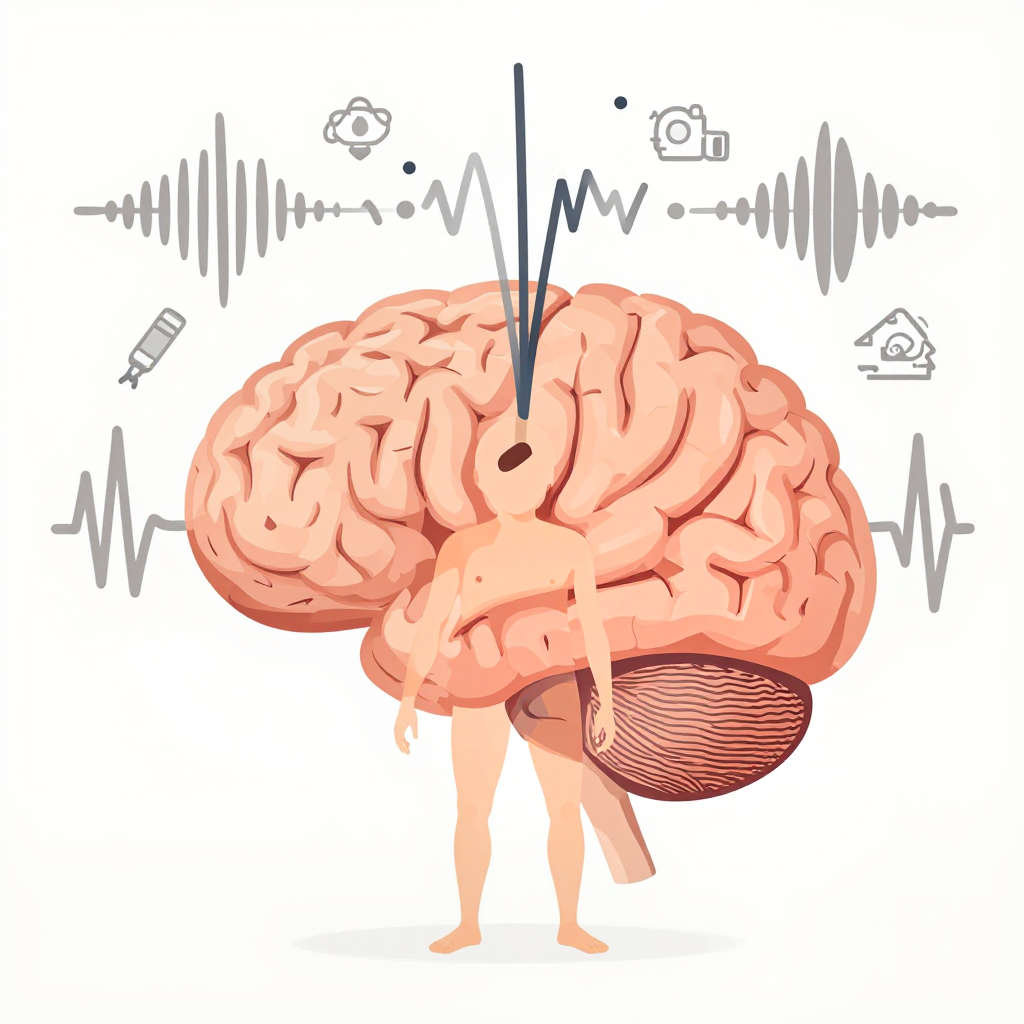
Noise Pollution and Your Brain's Decision Power
Ambient noise affects your brain's ability to think and make decisions.
The constant hum of our modern world—traffic, machinery, and digital notifications—is more than just background sound; it is an invisible environmental factor that profoundly shapes how our brains process information. As we increasingly live in densely populated and technologically advanced urban environments, understanding the subtle yet pervasive impact of ambient noise pollution on our cognitive functions is no longer a niche academic concern but a pressing public health issue. Recent research is compelling us to re-evaluate the simple notion that we can simply “tune out” noise, revealing a complex interplay between environmental soundscapes and our mental capacity for focus and complex decision-making (Meer, 2026).
What the evidence says points toward a direct link between chronic exposure to unwanted sounds and increased cognitive load. Noise does not just cause simple annoyance; it forces the brain into a continuous state of vigilance as it attempts to filter out distractions, which depletes mental resources needed for higher-order thinking (Leef, 2026). When the auditory environment is unpredictable or excessively loud, the brain expends significant energy managing this sensory input, effectively increasing cognitive load and reducing the available capacity for tasks like problem-solving or complex analysis. Furthermore, this effect is not limited to general awareness; specific acoustic environments can influence mental well-being. Systematic reviews indicate that both indoor acoustic and visual settings affect the mental health outcomes of populations, particularly those who are more vulnerable (Nature, 2025). The presence of constant low-level noise, such as that generated by expanding data centers, has been explored in the context of environmental neuroscience, suggesting that these physical exposures interact with our internal regulatory systems to impact resilience (Frontiers, 2026; trialsitenews.com, 2026).
To mitigate these effects, we can adopt several practical strategies for improving our cognitive environment. Prioritizing quiet spaces for deep work is essential because undisturbed environments allow the brain to enter states conducive to focused attention and enhanced memory encoding. Incorporating soundproofing measures in living or working spaces helps create sanctuaries where mental energy can be conserved rather than being spent on environmental management. Furthermore, actively seeking out natural sounds, such as soft nature sounds during breaks, has been shown to promote relaxation and foster a calmer mental state, indirectly boosting cognitive readiness. Finally, recognizing the cumulative effect of multiple stressors is vital; managing noise alongside other environmental factors helps protect overall cognitive resilience.
While we have strong insights into the physical and psychological impacts of noise exposure on performance, the precise long-term neurological pathways linking specific decibel levels to long-term memory consolidation or decision bias remain areas requiring deeper, sustained investigation.
Sources
- Smart cities, human minds - Meer | English edition — Meer | English edition (2026-07-28)
- Leef: environmental neuroscience modeling for cognitive resilience - Frontiers — Frontiers (2026-03-06)
- The effects of indoor acoustic and visual environments on the mental health of older adults: a systematic review - Nature — Nature (2025-11-12)
- Health implications of the rapid rise of data centers in Virginia: an exploratory assessment - Frontiers — Frontiers (2026-02-05)
- Data Centers: Examples of Adverse Health and Other Effects - trialsitenews.com — trialsitenews.com (2026-05-18)
- Impact of thermal-acoustic exposure on human performance of healthy adults: simulation of traffic noise and thermal conditions in the urban environment - Nature — Nature (2026-02-22)
- Dementia - World Health Organization (WHO) — World Health Organization (WHO) (2026-07-03)
- Communities Are Raising Noise Pollution Concerns About Data Centers - Environmental and Energy Study Institute (EESI) — Environmental and Energy Study Institute (EESI) (2026-03-23)
- Safeguarding food security through optimized environmental governance: a dual-objective model for China’s agricultural pollution control - Frontiers — Frontiers (2026-07-03)
- Homo sapiens, industrialisation and the environmental mismatch hypothesis - Longman - 2026 - Biological Reviews - Wiley Online Library — Wiley Online Library (2025-11-07)