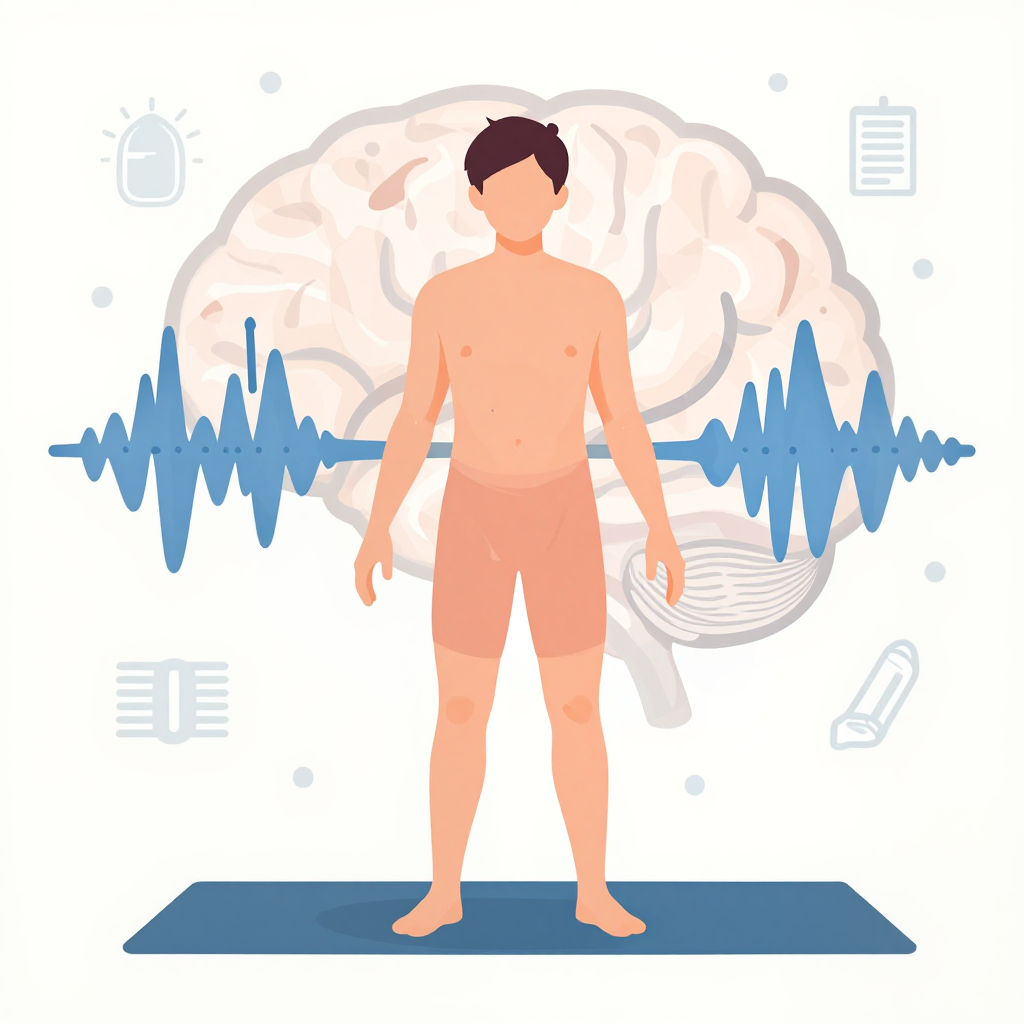
Sound's Silent Toll on Teen Brains and Stress
Explore how constant sound affects teen brain development and stress levels.
The world we inhabit is increasingly saturated with sound, from our daily communication to ambient environmental noise. As adolescents navigate a period of intense neurodevelopment, understanding the physiological impact of chronic sound exposure becomes critically important for their long-term health. While previous discussions focused primarily on immediate auditory processing, recent research is beginning to illuminate how sustained sound environments interact with the developing brain architecture and the complex stress response systems that shape an adolescent’s future.
Recent findings suggest a profound connection between environmental auditory experiences and neurodevelopmental trajectories. Chronic exposure to specific soundscapes or high levels of noise can act as a persistent environmental stressor, potentially influencing the development of brain structures and functions (Nature, 2025-09-30). This is not just about hearing; it involves biochemical pathways. For instance, research investigating chemical and biochemical influences on health indicates that external stimuli can trigger pathways leading to endocrine disruption, which has broader implications for neurological health (Frontiers, 2026-04-13). Furthermore, the concept of stress response is deeply intertwined with auditory input; chronic exposure can dysregulate the hypothalamic-pituitary-adrenal (HPA) axis, impacting how adolescents manage stress and regulate their emotional responses. Psychologists are increasingly examining how societal structures, including environmental factors, shape children’s development, reinforcing the need to look beyond purely biological explanations (APA, 2026-01-01). Studies focusing on brain alterations resulting from early life experiences underscore that environmental input plays a powerful role in shaping limbic brain processing—the areas responsible for emotion and memory—which is particularly sensitive during adolescence (Nature, 2026-03-05).
The mechanisms connecting sound exposure to these effects are multifaceted. For example, research exploring the influence of psychoactive compounds on adolescent development highlights how exposure can alter neurobiological pathways; while specific instances have been studied in animal models regarding cannabinoid exposure and cortical phenotypes (Nature, 2025-10-06), this points toward the brain’s sensitivity to external chemical and physical signals. The prenatal environment also sets a foundation, as demonstrated by studies showing the positive role of maternal sound stimulation in improving outcomes for newborns (Frontiers, 2026-02-27). This demonstrates that the influence of sound is not confined to later life but begins early in development. Therefore, managing the sonic environment can indirectly support the healthy maturation of critical brain systems and provide a more stable foundation for stress regulation during these formative years.
To promote optimal neurodevelopment amidst our increasingly noisy world, there are several practical steps we can take. Prioritizing periods of quiet reflection allows the developing brain time to process information without constant auditory overload. Creating designated calm zones within the home provides essential auditory sanctuaries where stress levels can naturally decrease. Actively engaging in mindful listening practices helps shift attention away from distracting noise and toward internal states, which supports better emotional regulation. Furthermore, advocating for quieter environments in schools and public spaces directly addresses a significant source of chronic environmental stress on adolescents. Finally, encouraging creative outlets that engage non-auditory senses offers an alternative way for adolescents to process complex emotions.
Ultimately, while the evidence strongly points to the critical role of sound in neurodevelopment and stress management, we still do not fully comprehend the precise dose-response relationships and personalized trajectories resulting from unique individual sound histories.
Sources
- Non-chemical, chemical, and biochemical, endocrine disruptors: biphasic health effects and pathophysiological insights - Frontiers — Frontiers (2026-04-13)
- Macroeconomic income inequality, brain structure and function, and mental health - Nature — Nature (2025-09-30)
- Psychologists are reimagining how society supports children - American Psychological Association (APA) — American Psychological Association (APA) (2026-01-01)
- Role of maternal sound stimulation in the NICU: improving outcomes for newborns and their families - Frontiers — Frontiers (2026-02-27)
- Emotional scars: limbic brain processing alterations in adults with childhood abuse across mental health disorders - Nature — Nature (2026-03-05)
- The antioxidant N-acetylcysteine prevents cortical neuropathological phenotypes caused by adolescent Δ-9-tetrahydrocannabinol exposure in male rats - Nature — Nature (2025-10-06)
- Hearing and early life adversity: effects of developmental stress on sensory processing - Nature — Nature (2025-08-21)
- Data Centers: Examples of Adverse Health and Other Effects - trialsitenews.com — trialsitenews.com (2026-05-18)