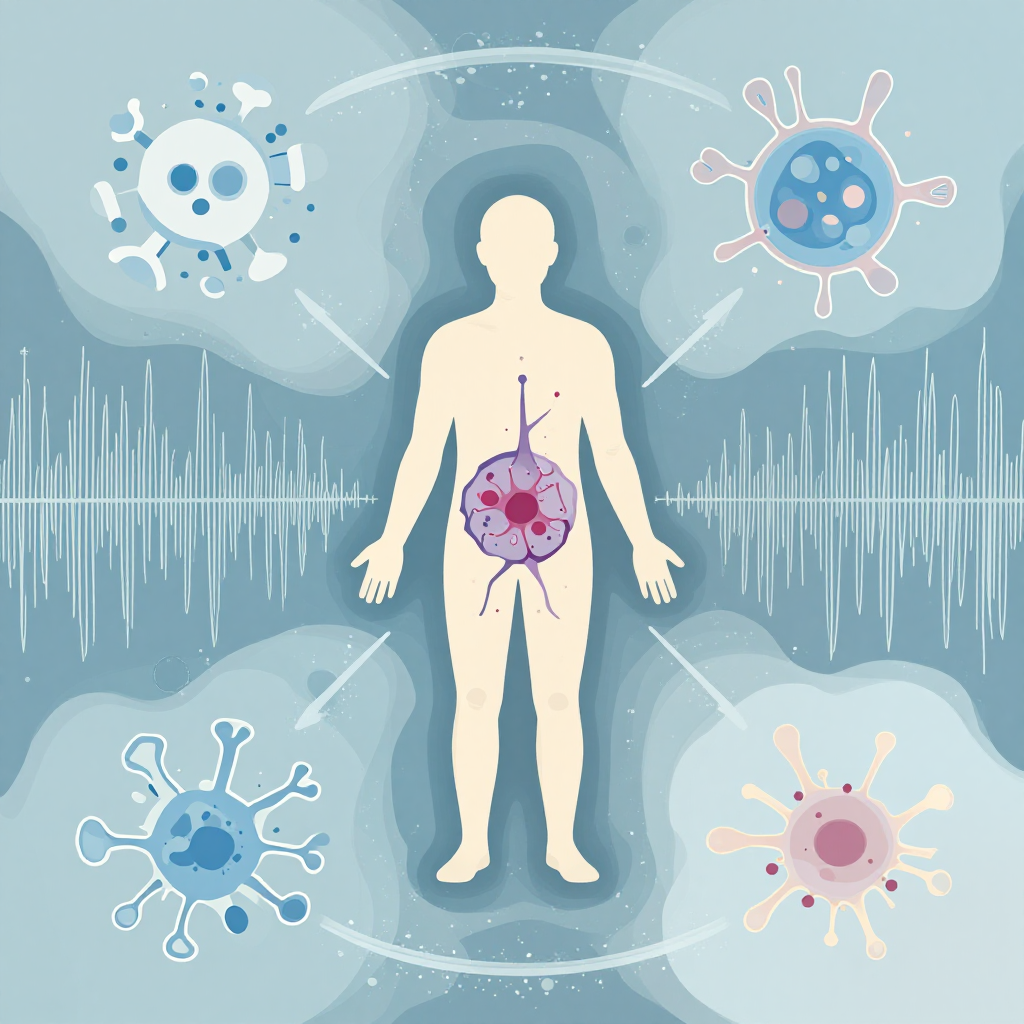
Noise Stress Your Cells and Immune System
Ambient noise affects cellular stress and immune function. Learn the hidden health impact.
The constant hum of our modern lives, from traffic to household sounds, is more than just an annoyance; it is a silent environmental factor with profound biological consequences. We often focus on direct pollutants, but the subtle, continuous exposure to ambient noise is increasingly recognized as a significant contributor to internal physiological stress that impacts our cellular health and immune function (Reference 4). Recent research is beginning to illuminate how these sounds interact with our body’s complex regulatory systems, suggesting that what we experience acoustically has tangible effects on our biochemistry.
The evidence points toward an established link between chronic noise exposure and the activation of the body’s stress response system, which in turn influences immune regulation. Sound waves are not merely physical vibrations; they are perceived by the brain as signals that trigger hormonal cascades, specifically involving the release of stress hormones like cortisol (Reference 1). This continuous state of low-grade activation can lead to dysregulation across various biological pathways. For instance, studies investigating endocrine disruptors highlight how environmental factors can influence systemic balance, suggesting that noise exposure may contribute to a broader pattern of cellular stress response (Reference 1). Furthermore, the immune system is exquisitely sensitive to these systemic signals; chronic stress alters the balance of immune cells and their responsiveness (Reference 6). While research focusing on specific genetic markers in immune systems, such as those found in model organisms, reveals how genes regulate stress responses (Reference 2, Reference 5), the connection between environmental noise and these molecular mechanisms is an evolving area of inquiry. Emerging molecular pathways, such as those involving long non-coding RNAs that connect metabolic states to disease processes, suggest that external stimuli can modulate internal signaling networks related to inflammation and cellular health (Reference 3).
Understanding this interaction requires looking beyond simple hearing damage to the biochemical impact of noise pollution on our internal environment. The constant stimulation forces the body into a persistent state of alert, which can shift the balance between inflammatory responses and immune regulation. This ongoing physiological strain may contribute to systemic issues that affect tissue health, as seen in complex conditions where gut-microbiota interplay is also implicated in inflammation (Reference 6). Therefore, managing the noise environment is becoming an important component of holistic wellness because it directly influences the delicate hormonal and cellular machinery that governs our well-being.
To mitigate these hidden impacts, we can focus on creating healthier acoustic environments around us. Prioritizing quiet sleep environments allows the body to enter restorative states necessary for effective stress recovery. Incorporating natural sounds into your daily routine provides a buffer against jarring, unpredictable urban noise. Establishing dedicated quiet zones within your living space offers crucial opportunities for cellular downtime and stress reduction.
Ultimately, while the precise molecular pathways linking every specific sound frequency to every cell’s stress response remain an active area of investigation, reducing exposure remains a critical step toward safeguarding our long-term health.
Sources
- Non-chemical, chemical, and biochemical, endocrine disruptors: biphasic health effects and pathophysiological insights - Frontiers — Frontiers (2026-04-13)
- Integrated analysis of GWAS and molQTLs reveals cell-specific genetic variants in the porcine immune system - Nature — Nature (2026-02-11)
- Long non-coding RNAs in the crosstalk between diabetes and colorectal cancer: molecular mechanisms and endocrine pathways - Frontiers — Frontiers (2026-05-27)
- Your bedroom glow might be quietly damaging your heart - ScienceDaily — ScienceDaily (2025-11-03)
- Genome-wide identification and functional characterisation of the EDS1 gene family reveals evolutionary conservation and stress-responsive regulatory roles in barley - Nature — Nature (2026-03-03)
- From gut-reproductive microbiota to ferroptosis: a comprehensive insight into the molecular-pathogenicity of endometriosis - Frontiers — Frontiers (2026-04-28)
- Machine learning-enabled spatial multi-omics uncovers lactate-driven targets and tumor microenvironmental reprogramming in cancer - Nature — Nature (2025-12-30)
- A probabilistic and context-dependent cell culture modelling framework for regulatory toxicology - Frontiers — Frontiers (2026-03-03)
- Drug-tolerant persister cells in cancer: bridging the gaps between bench and bedside - Nature — Nature (2025-11-17)
- Neurosurgery as an immune anchor point: a translational framework for perioperative immunoengineering - Frontiers — Frontiers (2026-03-27)