Gut Brain Connection Microbial Metabolites and Mood
Microbial metabolites influence brain chemistry by affecting neurotransmitter production in a symbiotic relationship.
The connection between our gut bacteria and our brain is rapidly moving from an interesting hypothesis to a central pillar of modern neuroscience. Conventional wisdom has evolved significantly as research increasingly emphasizes the intricate, two-way communication happening along the gut-brain axis. We are no longer viewing the gut simply as a digestive organ; instead, it is understood as a dynamic organ actively shaping our mood, cognition, and overall health through the metabolites produced by its microbial inhabitants (Reference 1). Understanding this symbiotic dialogue is crucial because conditions like anxiety, depression, and neurodegenerative diseases are increasingly linked to imbalances in this system (Reference 3).
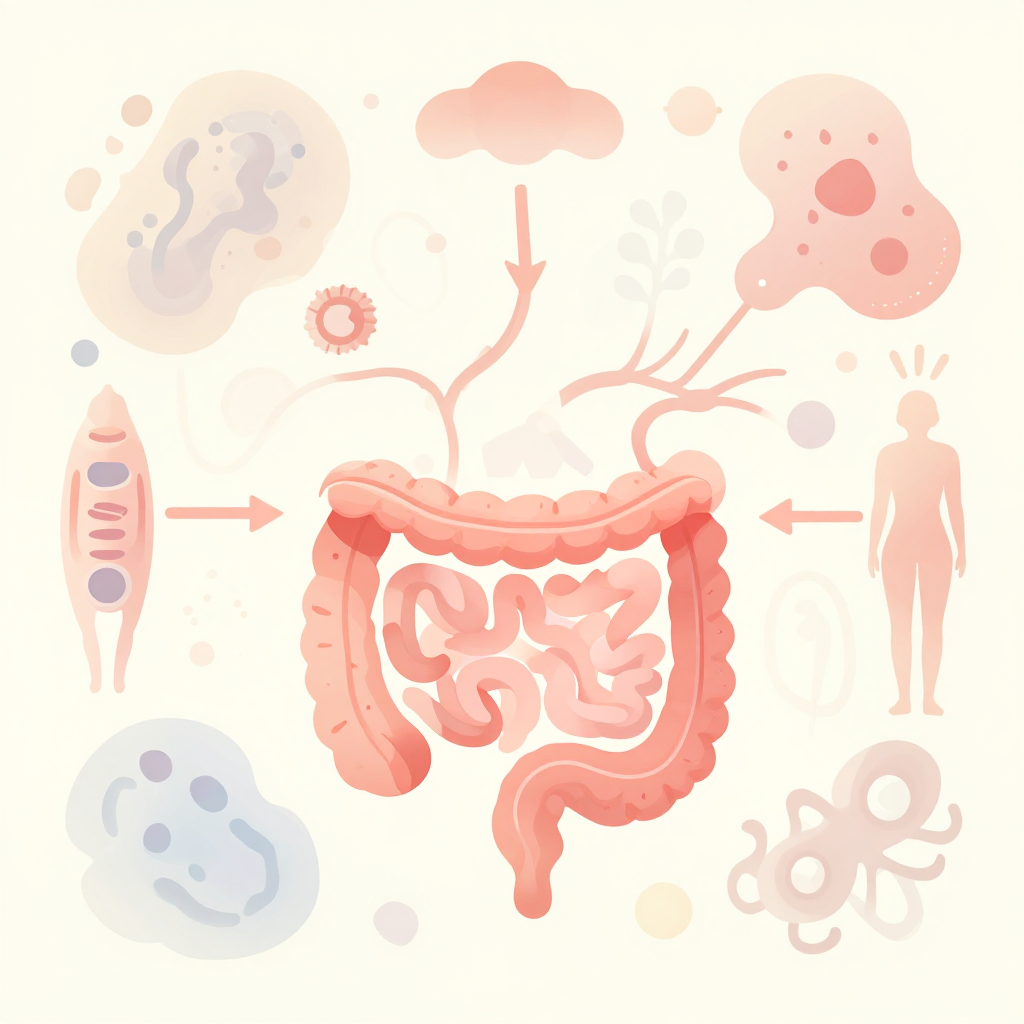
The evidence strongly suggests that the trillions of microorganisms living in our intestines do more than just digest food; they actively influence brain function through a complex chemical signaling network. These gut bacteria metabolize dietary components—like fibers and polyphenols—and produce various metabolites, such as short-chain fatty acids (SCFAs), which act as vital messengers. SCFAs are key players, influencing everything from immune regulation to the health of the blood-brain barrier (Reference 4). For instance, research indicates that these microbial byproducts engage directly with host cells in the brain, modulating processes critical for neurotransmitter production, such as serotonin and GABA (Reference 3). Furthermore, emerging models focusing on synthetic microbial communities are helping us dissect precisely how these gut microbiota-host interactions influence complex neurological conditions (Reference 2). This bidirectional crosstalk implies that what we eat and the health of our gut directly feed into the chemical environment of our brains.
This profound connection means that nurturing a healthy gut ecosystem is an indirect but powerful strategy for supporting mental well-being. To foster this beneficial relationship, focus on feeding your gut with diverse, whole foods rich in fiber, as these provide the necessary fuel for beneficial bacterial growth (Reference 5). Regularly consuming polyphenols, found abundantly in berries, nuts, and dark chocolate, further supports the modulation of the microbiota in a way that supports brain health. Incorporating fermented foods, like yogurt or kefir, introduces beneficial bacteria directly into the system, promoting a diverse and robust community structure. Finally, managing overall inflammation through a balanced diet helps ensure that these microbial signals can effectively communicate with the central nervous system (Reference 4).
By focusing on nutritional diversity and gut health, individuals create an environment where positive metabolite production is prioritized, offering a pathway to supporting optimal neurotransmitter balance. The way we manage our diet and gut health is fundamentally linked to the neurochemistry of our minds.
Despite this exciting progress, the precise mechanisms governing every single metabolite’s effect on specific neurotransmitter pathways in the brain remain an area requiring deeper, more detailed investigation.
Sources
- Nutrition and the gut microbiome: a symbiotic dialogue influencing health and disease - Frontiers — Frontiers (2026-01-23)
- Synthetic microbial communities: a novel emerging models for dissecting gut microbiota-host interactions in neurodegenerative diseases - Frontiers — Frontiers (2026-05-06)
- Bidirectional crosstalk between the gut microbiota and cellular compartments of brain: Implications for neurodevelopmental and neuropsychiatric disorders - Nature — Nature (2025-08-13)
- Beyond the gut: decoding the gut–immune–brain axis in health and disease - Nature — Nature (2025-08-14)
- Dietary polyphenols maintain human health through modulation of gut microbiota - Frontiers — Frontiers (2026-01-05)
- Health risk analysis of micro-and nanoplastic exposure via the microbiota-gut-brain axis - Frontiers — Frontiers (2026-02-03)
- Gut microbiota as a novel target for treating anxiety and depression: from mechanisms to multimodal interventions - Frontiers — Frontiers (2025-10-20)
- Why nurturing the gut microbiota could resolve depression and anxiety - Nature — Nature (2025-08-18)
- The microbiota-gut-brain-epigenome axis as a novel therapeutic target for decoding postpartum depression - Frontiers — Frontiers (2026-02-25)
- From cooperation to collapse: the diet-microbiota-host gene triad in disease and aging - Frontiers — Frontiers (2026-07-14)