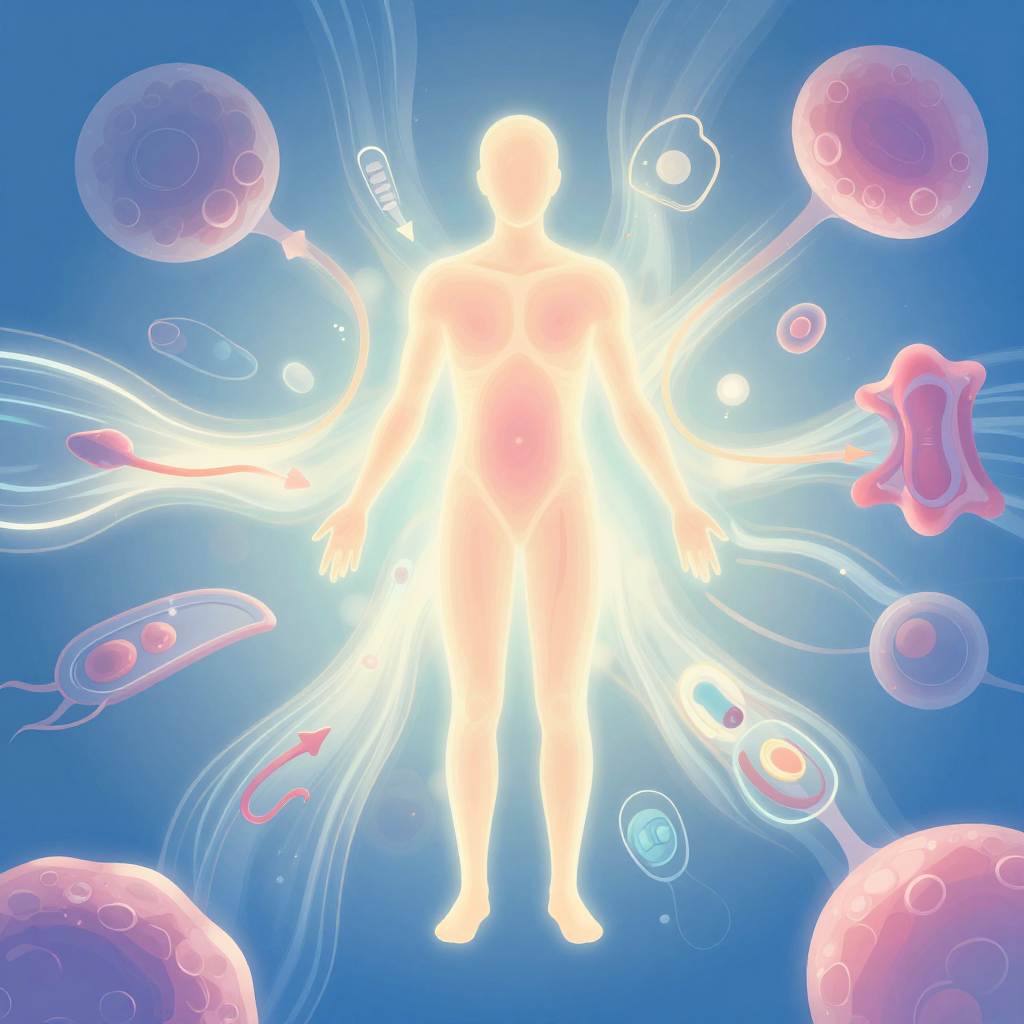
Light's Effect on Mitochondria and Cellular Health
Learn how light spectrum affects mitochondria and oxidative stress for better cellular health.
The way we interact with light every single day is profoundly influencing our internal cellular health. As we increasingly rely on screens and navigate our environments illuminated by artificial light, understanding the microscopic effects of this exposure—specifically on our mitochondria, the cell’s powerhouses—is becoming critically important for overall wellness. Recent research continues to refine our understanding of how light interacts with biological systems, shifting focus from mere vision to systemic metabolic health.
The link between light spectrum and cellular energy is rooted in the complex chemistry occurring within our mitochondria. Mitochondria are responsible for generating most of the body’s energy through a process that produces vital byproducts, but also generates reactive molecules, or oxidative stress. Exposure to certain wavelengths of light, particularly blue light, has been implicated in this process. Studies investigating photooxidative molecular damage under blue light have highlighted potential risks associated with this exposure (Nature, 2026-01-07). Furthermore, research looking at the effects of blue light on tissues, such as in mouse corneas, demonstrated measurable changes in oxidative status (Nature, 2026-05-19). This suggests that ambient light isn’t just passive; it actively participates in molecular signaling.
The role of different light colors reveals distinct biological effects. Red light therapy has shown promise in promoting cellular repair and improving overall energy functions within the body (News-Medical, 2026-03-15). This points toward the beneficial capacity of specific wavelengths to stimulate beneficial cellular processes. Conversely, understanding the harmful potential of certain exposures necessitates caution. While research explores the pathways by which light influences biological systems, it is important to recognize that modulating oxidative stress is a key area of focus in managing cellular health (Wiley & Sons, 2025-12-05). This underscores why keeping mitochondrial health at the center of clinical care is increasingly relevant (Acupuncture Today, 2026-03-31).
To harness the potential benefits of light exposure for your well-being, focus on balancing your daily light intake. Prioritizing natural light exposure in the morning can help regulate your circadian rhythms and support natural energy cycles. Incorporating sessions of red light exposure may offer supportive mechanisms for cellular energy restoration. Furthermore, protecting your eyes from excessive high-energy blue light when using screens can help mitigate potential cumulative oxidative stress. Finally, maintaining a healthy overall environment, free from excessive environmental stressors like microplastics that influence neurobehavioral systems (Frontiers, 2025-12-01), contributes to the body’s capacity for optimal function.
Ultimately, while we are making significant strides in understanding the photochemical and metabolic interactions of light, the precise long-term systemic effects across the entire human lifespan remain an area requiring deeper longitudinal investigation.
Sources
- Photooxidative molecular damage under blue light - Nature — Nature (2026-01-07)
- Macrolide Antibiotics as Modulators of Cellular Oxidative Stress: Mechanisms, Pathways, and Therapeutic Implications - Wiley & Sons — Wiley & Sons (2025-12-05)
- Red Light Therapy: How Light Improves Cellular Energy and Repair - News-Medical — News-Medical (2026-03-15)
- Putting Mitochondrial Health at the Center of Clinical Care - Acupuncture Today — Acupuncture Today (2026-03-31)
- Effects of blue light and blue-light protection eyeglass lenses on the oxidative status of mouse corneas - Nature — Nature (2026-05-19)
- From environment to brain: the role of microplastics in neurobehavioral disorders - Frontiers — Frontiers (2025-12-01)
- LED Lighting Is Creating a Crisis for Human Mitochondria, Here’s What the Research Actually Says - Medium — Medium (2026-05-25)
- How Heat Stress Affects the Human Body at the Cellular Level - News-Medical — News-Medical (2026-02-16)
- Impact of in vitro exposure to 5G-modulated 3.5 GHz fields on oxidative stress and DNA repair in skin cells - Nature — Nature (2025-08-25)
- Chloroplast Stress Signals Orchestrate Epidermis-Specific Remodeling of Mitochondria and ER Under High Light - advanced.onlinelibrary.wiley.com — advanced.onlinelibrary.wiley.com (2026-01-27)