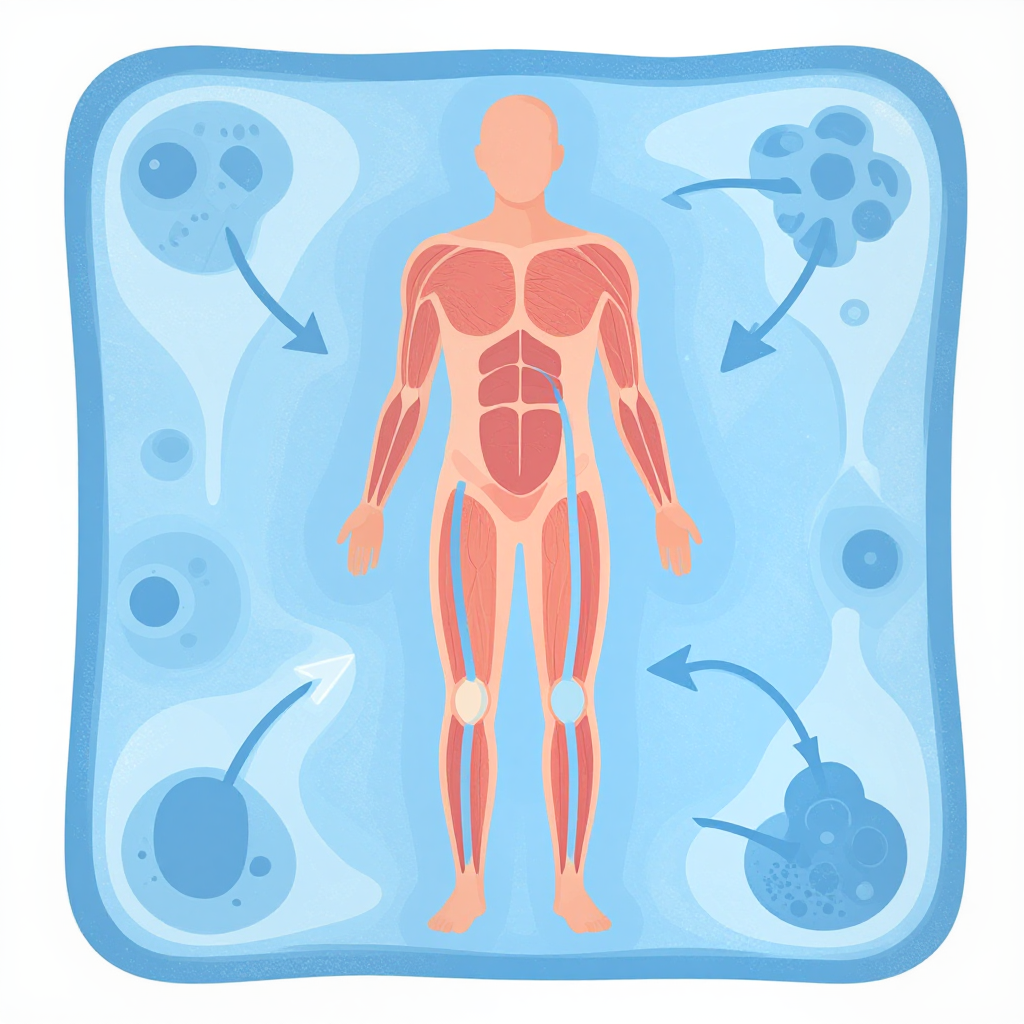
Cold Heat Stress: Impact on Cell Metabolism
Explore how cold and heat stress impact cellular stress and metabolic flexibility.
The way our bodies react to temperature changes—whether we are exposed to cold or heat—is far more complex than a simple feeling of discomfort. In today’s world, where climate variability is increasing and we experience more extreme weather events, understanding the physiological role of these thermal extremes on our cells and metabolism is crucial for long-term health and resilience (Reference 3). Conventional wisdom often focused solely on immediate physical safety from temperature, but recent research is revealing deeper, molecular implications regarding cellular stress and metabolic flexibility.
The body’s core challenge during thermal shifts involves managing internal homeostasis while dealing with external demands. Exposure to chronic cold, for instance, triggers significant transcriptomic alterations in tissues that are metabolically active, such as those found in pigs (Reference 2). This suggests that sustained cold exposure forces the body to fundamentally rewire its metabolic machinery in an attempt to survive, impacting how energy is processed at the cellular level. Conversely, intense heat stress places mitochondria—the powerhouses of our cells—under severe strain, leading to mitochondrial dysfunction which can escalate into multi-organ failure mechanisms (Reference 4). These findings highlight that temperature extremes are not just external physical events; they are potent stressors that directly influence the delicate balance between energy production and cellular repair.
The concept of metabolic flexibility, which describes the body’s ability to efficiently switch between burning fat and burning carbohydrates for fuel, is intimately linked to how we manage these thermal challenges. When the body experiences stress, it must allocate limited resources; cold forces adjustments in membrane function and enzyme activity, while heat demands rapid thermoregulation that consumes substantial energy reserves. Research examining organisms with limited thermal tolerance, such as tropical insects (Reference 5), further underscores how profoundly environmental temperature dictates genomic signatures related to survival strategies. This interconnectedness suggests that adapting successfully to thermal extremes relies on optimizing the flexibility of our metabolic pathways rather than just brute-force physiological resistance.
Understanding these mechanisms translates into actionable health insights for daily living. Prioritizing consistent, moderate exposure to different thermal environments, such as cold water immersion or mindful heat management, can help train the body’s stress response systems to manage fluctuations more effectively. Furthermore, maintaining a diet rich in antioxidants supports the cellular machinery attempting to repair the damage caused by thermal insults, thereby bolstering metabolic flexibility. Engaging in practices that promote deep rest and recovery is also essential, as tissue repair and metabolic recalibration occur most effectively during periods of reduced physiological demand.
Ultimately, while we are making significant strides in understanding these complex interactions between temperature, genetics, and metabolism, a complete picture of how individual variability mediates this response across the lifespan remains an area actively under exploration.
Sources
- Physiological responses and adaptive mechanisms of amphibians and reptiles to multiple interacting environmental stressors: an integrative review - Frontiers — Frontiers (2026-04-06)
- Chronic cold stress induced transcriptomic alterations in multi-metabolically active tissues of pigs - Nature — Nature (2025-11-22)
- Advancing ecological and environmental biology research - Springer Nature Link — Springer Nature Link (2025-09-01)
- Energy metabolic dysregulation in heat stroke: from mitochondrial dysfunction to multi-organ failure mechanisms and targeted intervention - Frontiers — Frontiers (2026-04-21)
- Limited thermal tolerance in tropical insects and its genomic signature - Nature — Nature (2026-03-04)
- 5 Well-Being Trends in 2025 That Go Beyond Hype And Actually Help - NCHStats — NCHStats (2025-11-20)
- Seed metabolomic profiling of contrasting mung bean ( Vigna radiata ) genotypes under heat stress - Nature — Nature (2026-03-23)
- Climate change and citrus nutrition: mechanisms, nutrient imbalances, and inclusive management - Frontiers — Frontiers (2026-05-06)
- Heat stroke dysfunctions: from pathophysiology to prediction - Frontiers — Frontiers (2025-12-02)
- Resolving coral temperature vulnerability through heat and cold bleaching thresholds | Communications Biology - Nature — Nature (2025-12-20)